14 November 2026
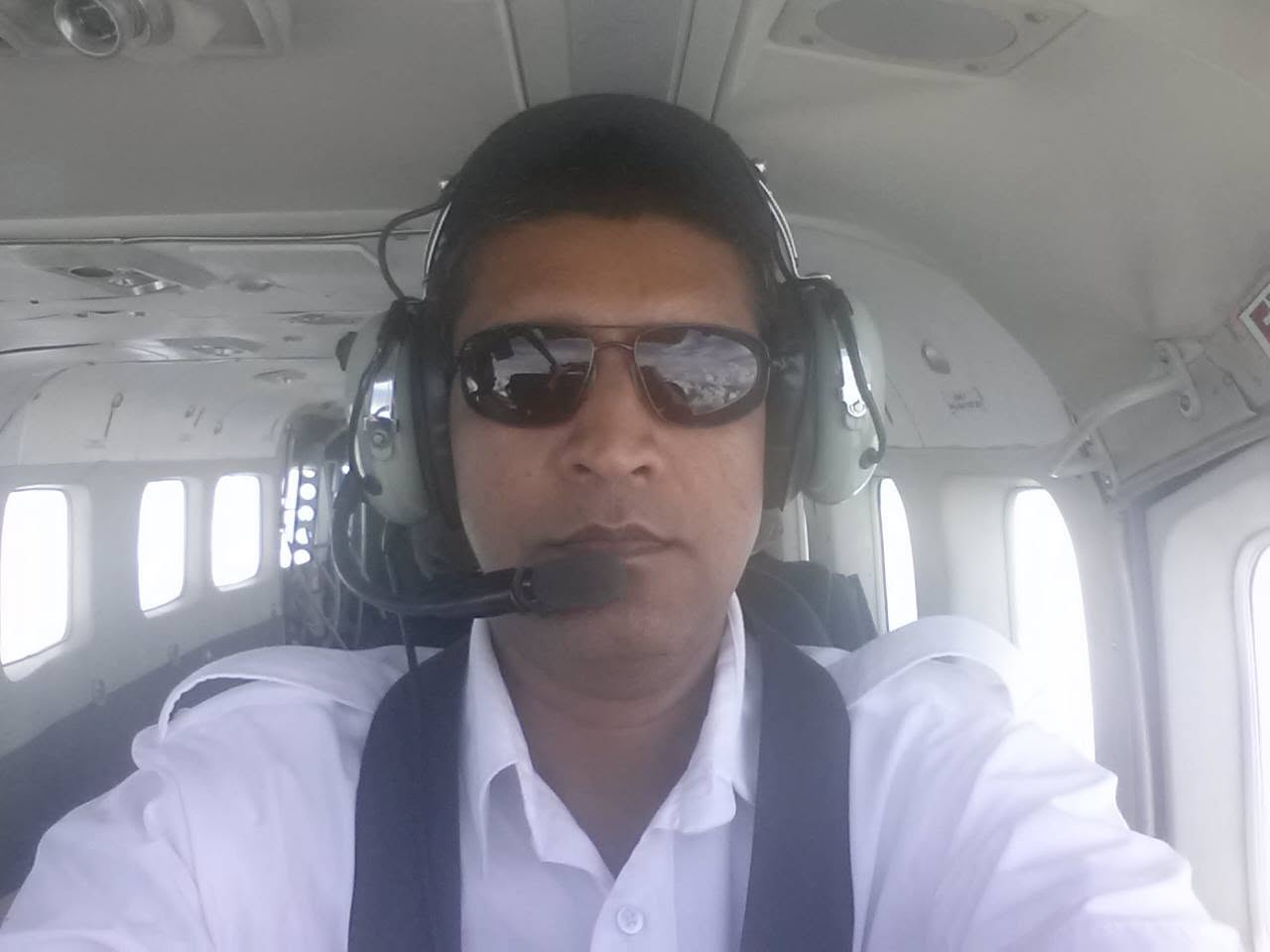
November 14th 2026 marked the 25th year anniversary of the hijacking of a Trans Guyana Airways (TGA) single engined turboprop Cessna Grand Caravan aircraft, registration: 8R-GTG, on a flight from Lethem to Ogle of which I was pilot in command.
Included are some of the newspaper reports following the incident which, for the most part, covers the general scenario. For this milestone I have – for the first time – compiled my recollection of the experience, including details not contained in those reports. The aircraft seats fourteen people in an arrangement of two crew abreast followed by 4 rows of three abreast. There is an aisle between the single seats on the left and double seats on the right. Additionally, the aircraft is approved for single crew operations, and a passenger can occupy the co-pilot seat (right side) as was the case here.
The Hijacking
As the passengers were settling in their seats for the return trip to Ogle Airport, the passenger in the middle seat first row commented that he hoped the person in the co-pilot’s seat, Keith McLean, was not Bin Laden. It seemed like a light moment and passengers chuckled. The commenter later turned out to be leader of their group of four hijackers. All requirements were completed, and we took off for Ogle uneventfully. About two to three minutes into the flight (during climb), some movement was sensed by my peripheral vision on the right. Before I could turn around, I felt something like cold metal pressing hard on the back of my neck and left side rib cage; the same Bin Laden commenter verbally instructed me to “go down,” while motioning downwards with one hand. He also removed my headset and sunglasses and said not to look back (at him). My thoughts were reeling, and it took a few moments to process what was taking place.
Meanwhile, the pressure on my neck and rib was to the point of painful discomfort; I was hunched over the control yoke from the pressure. As I regained some composure, descent was initiated. I later realised another hijacker was seated behind me, and he was the one pressing a gun to my rib, while the leader was pressing the one against my neck. During this time, the scariest moment of the ordeal occurred for me: the leader ran his hands along my waist and seat belt. I thought that he was going to release my seatbelt, possibly shoot me, then throw me out the door on my left side with the intention of taking control of the aircraft. He then frisked Keith in the same fashion. It turned out he was trying to determine whether we had any firearms in our waist. He then asked if we had any guns, to which we both replied in the negative. I did, however, have my 9mm Beretta pistol in my flight bag between the two crew seats.
As we descended, he kept motioning to the altimeter and pointing down. While still under the neck and rib pressure, he held a paper out to me with what appeared to be GPS coordinates. He then pointed to the aircraft GPS unit and said, in jerky English, “enter it and fly to there”. My colleagues may recall that that Caravan was the only aircraft in our company with that particular GPS model, a Garmin 150 panel mounted (different from the portable Garmin 100 which was commonly used at the time). It was preprogrammed with destination and airspace boundary waypoints, so crew had no need to enter waypoints. On this basis, entering coordinates on this unit was going to be a challenge, and a bit of feeling one’s way around; not getting it correct, claiming to be unable to do it, or coming across as uncooperative were not options one wanted to test.
Fortunately, the task was completed without much hiccup under the circumstances. I remember replacing the coordinates of the waypoint named ‘Aishalton’ with those given, possibly because Aishalton was the first alphabetically in the list  .
My request for an easing of the neck and rib pressure to complete entering the coordinates was also granted, much to my relief. By the time that was completed, we were approaching the Mertizero area flying 200 feet above the ground, still following the Lethem to Ogle route. The coordinates entered showed a destination in Brazil’s direction approximately 50 minutes away by flight; it was close to the Venezuelan border. With the hijacker’s approval, I turned the aircraft left and headed to the new destination.
The Flight to Brazil
While maintaining an average height of 200 feet I received constant reminders to ‘stay low’. The hijacker also said, ‘I want to feel bushes on my ass’. I complied with the former. He then showed me a handheld GPS that he had and said, “don’t try to fool me,” (of the destination). No convincing was required. The constant reminder and concern to stay low by the hijacker was to avoid being detected by Brazilian radar on entering their airspace. An emotional few moments occurred when we crossed the Ireng river which is the Guyana/Brazil border. It seemed to have a finality to it. A jumbled mixture of thoughts, questions and emotions rushed through me: anger, rage, etc. Should I have cut the engine and landed on a road in Guyana? Would we ever come back alive? Movie scenes of drug smugglers executing those who were useless, or a threat to their secrecy, all went through my mind. Home, family, my wife who was pregnant with our first son. I remember saying a silent prayer [for y’all that will take me up on that, it was before ;)].
We passed just South of Normandia on the Brazilian border. My thoughts were interrupted by the racking of a pistol slide. I was tapped on my shoulder and asked in a hostile manner, “this your own?”. He was holding my Beretta. I didn’t realise that he discovered it after searching through my flight bag. I answered yes, to which he queried in non-fluent English, “why did you say no gun initially?”. I managed to glance back at him momentarily; he was wearing my sunshades and a cap that he found in my flight bag. I explained that I had no gun on my person (none on me), and that is what I thought his question meant. Sensing my concern and distraction (we were entering an area of small hills and terrain bumps ahead), he said “continue fly” and seemed to accept the explanation. After a while he asked if he could smoke a cigarette and lit it after I nodded (a ‘noanswer’ on my part was not considered). I resisted the urge to ask him if I could do the same.
Nothing notable happened until we reached the coordinates. He seemed unsure of something and kept looking down to visually scan the surrounding area. We circled overhead a few times, then he said to land. The landing strip was an access road from a main road to a ranch (which had a few buildings). More accurately, it was a two-wheel track dirt road with a slightly lower dry ditch on either side full of terrawad – a Rupununi term for football sized earthen mounds formed when a swamp dries up.
I landed, and we were facing the ranch when the plane stopped moving. Initially the two hijackers behind me indicated for me to park to ‘the side’; they didn’t insist as their attention seemed to be occupied outside, and I pretended not to notice as ‘the side’ had the terrawad. If I parked there, the terrawad would have caused the plane’s wheels to get stuck. We waited with the engine running as instructed. I noticed a few individuals, some with their shirts covering their faces, speaking with each other and the leader – the latter deplaned through the back door. They were looking around and seemed uncertain of what to do. I later learnt that two of them with their faces covered were also hijackers who were guarding the passengers. They occupied the rear seats of the aircraft.
After Landing in Brazil
After a few minutes the leader returned and said he wanted me to take off and fly around the area. Just around that time I pressed a button on one of the avionics panel displays to cancel a flashing message causing it to beep momentarily. The other hijacker responded by jamming the gun in my rib again. I held my hands up repeating “no problem, cancelled autopilot message,” or something to that effect. The leader seemed satisfied with the answer and nodded to the other one to back off.
The takeoff topic resumed, and I communicated that I would need to assess the takeoff distance visually before attempting to takeoff. I was allowed to disembark (the park brake was set). Take off was possible even though the distance was short. There was a sign above the gate/fence area at the far end. While outside I noticed the other hijacker, who had deplaned with me, had his firearm fully cocked all the time on and off my rib. Fortunately, there was no finger twitching on his part.
The takeoff was ok using a non-standard procedure that some experienced C208B pilots kept in their back pocket just in case. I’ll leave the rest unsaid. As we got to 200 feet, the head honcho requested to fly in a few directions which were complied with. He kept scanning the area as if he was looking for something. Eventually, he said that he would let us go if we could land and drop them off on a road. My spirits lifted as there was a suitably long gravel road nearby. However, the joy was short lived as he changed his mind soon after and requested that we return and land at the previous ranch site. This was done. This time I was instructed to shut down the engine, and everyone was told to exit the aircraft. At that moment I realized that the passengers had their arms taped to their bodies above their elbows with duct tape.
The tape was removed and we were led to a barn like building which was roofed but not enclosed if my memory serves me right. There, we were given a speech – in limited English – from the leader. He said that they were not murderers (incidentally a line in an old aircraft hijacking movie), and that we were lucky because they may let us go. However, he gesticulated what would happen if they were caught by holding the gun to his head and pretending to be shot. Additionally, he said something to the effect of “if we let you go, do not report where we are”. While that was taking place, some of their accomplices were sent to the aircraft, and they returned with some of the personal items of the passengers – including a pair of binoculars and my headset.
After some more rambling on the same topic, he said that he would let us go, and he may give me back my gun. All or most of the other items were fortunately given back to the passengers at their request, as I recall, except my headset. After some more rambling, he said he couldn’t return my gun as he may have to ‘use it’. He then said we can go. Everyone was grateful and nervously thanked him before making our way back to the aircraft. We were not accompanied, but they kept an eye on us. While walking back and ‘trying not to run’ – as described by a passenger in one of the newspaper reports – Paul Dhanraj (a passenger), revealed that he still had his handgun on him which the hijackers did not detect. Wisely, no action was taken. On arrival at the aircraft, I did a brief check of the underbelly cargo pods, fuel caps and general condition of the aircraft – all seemed well. While this was happening, a passenger – understandably anxious – was urging me “come on let’s go, let’s go, he changed his mind several times, he may change it again,”. While that was true, I wanted peace of mind that the aircraft was not tampered with or booby trapped before we departed.
The Return Flight to Lethem
We departed uneventfully, intended destination being Lethem, as there was not enough fuel to fly to Ogle. The fuel remaining on board was barely enough to make Lethem due to the extended low-level flying; a considerable amount of fuel was consumed as turboprop engines have a much higher fuel burn at low level crusing altitudes compared to higher levels. The weather was good, so I had one less worry. I climbed to 5000 feet enroute to Lethem with an estimated flight time of 50+minutes. Flying below radar was not a choice due to the limited fuel. I had decided either way the plan was to put as much distance between us and the hijackers and take the chances of landing on a dirt road if fuel dictated. While enroute I realised the hijackers had missed removing the aircraft’s hand microphone. This was a big plus for us as it allowed radio transmissions without a headset. The aircraft also had overhead speakers to listen to the radios.
I called on the Guyana Air Traffic Control frequency and was heard by Capt. Paul Singh who was flying. I explained the situation briefly to him and included our estimated arrival time for Lethem, which he relayed to the control tower. Contact was also made by HF radio to TGA’s base at Lethem.
Matthew and Jude Abraham, two brothers and longtime friends, ran our TGA Lethem office. I gave them the same information. That communication was a breath of fresh air for all, including passenger family members, my company, and the general aviation community. Until then, our aircraft was considered as an overdue/missing aircraft. A search and rescue team was mobilised to look for it as the only information known by them prior was the aircraft departure time from Lethem.
Approximately 15 minutes from Lethem some of the passengers said that they had seen an aircraft following us. I looked around but didn’t notice anything. More thoughts. A few minutes later they alerted me of the aircraft and sure enough, off to our left side was a Brazilian military Embraer Tucano turboprop aircraft. They are fitted with machine guns and other armaments, and are used in Brazil for border patrol and intercepting unlawful aircraft. The Tucano rocked its wings in standard intercept procedure, and I did the same to acknowledge the intercept. The pilot then helda paper sign to his window with the 121.5MHz International Emergency frequency. I switched to that frequency and initiated radio contact. He replied in Portuguese. Unable to speak the language, I requested Ms. Shirley Melville, a passenger who I knew well and was Portuguese fluent, to come forward and explain our situation to him over the radio, which she did.
As this was happening, Lethem and Bonfim (Brazilian town opposite and very close to Lethem on the Takutu River country border) were visible ahead of us. I commenced descent, adjusting direction slightly from Lethem to the Bonfim airstrip. I didn’t want it to appear as if we were trying to evade the Brazilian military. My plan was to hold over the Bonfim airstrip (less than a minute flight time from Lethem airstrip) until we were instructed otherwise.
By then the aircraft low fuel warning bells and whistles started to sound. As we approached over the airstrip, the interceptor pilot enquired in English if we spoke English. That was a happy moment. I then took over the communication from Shirley and told him we were low on fuel and wanted to land Lethem. He would have heard the fuel warnings during my transmissions as they were loud and continuous. There was a pause – maybe because he was communicating with his superiors. At this point we were circling Bonfim at 500 feet, bells going and a Tucano with a wing that appeared to be an extension of my wing on the left. It was truly skillful flying on the part of the Tucano pilot. Looking up left I remember his image vividly – the ominous fighter jock look with military flight helmet and black sun visor covering his face. Icy.
Anecdotally, I learnt later from Matthew and Jude that observers on the ground in Lethem, made aware of what had happened, were paying keen attention to the happenings in the sky over Bonfim. They were shouting, “the plane blocking he” (from coming to Lethem) as we circled. It surely may have appeared so from the ground. After the pause, the Tucano’s pilot came on the radio and asked, “confirm you want to land Lethem?” I replied, “yes, we’re low on fuel and want to land Lethem”.
He then said, “ok, have a good landing.” That was music to my ears. I said thank you, rolled out of the bank on final approach to Lethem and landed. As we taxied back to park, we noticed Guyana Defence Force soldiers with machine guns had positioned themselves incognito along the airstrip keeping a watchful eye on the aircraft. All the up to the moment details of the hijacking may not have reached them, and rightfully, they were not letting their guard down. Fortunately, that was the last time for the day we were on the wrong side of a gun barrel .
The Brazilian aircraft continued circling for a while before departing overhead Bonfim.
Arrival in Lethem and the Aftermath of the Occurrence
It was a great feeling to be back on home ground. After the greetings and welcomes from friends and others, I spoke to Capt. Roy Jainandan – TGA’s Director of Operations (and a good friend) –on the telephone. He was in contact with the Brazilian Ambassador after learning the facts. The ambassador was requesting that I visit the Brazilian authorities in Bonfim to furnish them with details so that they can pursue the perpetrators. However, due to my state of mind, I told Roy respectfully (and humourously) that no one was getting me to move from Guyana at that point in time. That was communicated to the ambassador who understood and arranged for the Brazilian Military and Federal Police representatives to meet me in Lethem. It was a cordial meeting. A detailed description of the occurrence was given to them with Matthew and Jude ironing out any translation issues. All queries were answered and the coordinates for ‘Aishalton’ given to them.
They thanked us and left. The rest of the general story for the day was covered in the press reports, so I need not repeat it. The aircraft that transported me back to Ogle was crewed by Capt. Gavin (Jimmy) Harewood and Capt. Sarvepaul Persaud, my brethren, who I gave a physical demonstration of the cold steel experience using my fingers. They replied in words I wouldn’t repeat. Another one, Capt. Mike Rogers, I was told, got impatient at the mobilising of the search and rescue plan and asked to begiven a fuelled aircraft; he said that he was ready to go off alone if nobody else was ready. The late Capt. Malcolm Chan A Sue always joked it was an international affair, as he first learnt of the hijacking by seeing it on CNN’s ticker tape.
In the weeks following the hijacking I remember being invited to visit Boa Vista by some friends. I declined politely, joking that if I met the hijackers there, I don’t know what I would do. This turned out not to be a far-fetched possibility. A while after that, a Brazilian newspaper for the Roraima State carried a report that the lead hijacker was caught. It carried a picture of him looking dishevelled. His name was given as Roberto Golfaren Falero Mederos. The report stated thatresidents of an area in Boa Vista reported a suspicious character in the area to the Civil Police.
When the police arrived, he attempted to flee and was caught hiding under a mattress in a room. On questioning, his story didn’t add up so he was handed over to the Federal Police. With probably more persuasive techniques, the Federal obtained a confession from Roberto that he was a hijacker, and that he was paid four thousand US dollars to deliver the aircraft to the ranch location by his‘boss’.
The hijackers were supposed to be met by individuals there, including a pilot who was to take it on its onward journey after being refuelled. It was also stated that aircraft fuel was found by the
Brazilian authorities in the bushes near the ranch previously (based on the ‘Aishalton’ coordinates). No reason was given for the individuals not arriving at the rendezvous point. This no show was the reason that the hijackers were unsure after landing at the ranch. Unsurprisingly, their subsequent request to fly around the area was to determine whether the rendezvous team was nearby. Us being allowed to go was most likely based on fear of the aircraft leading authorities to the ranch if there was an aerial search. The hijackers may have considered residents reporting low flying/strange registration aircraft sighted in the area. Whatever the case, they seemed to be buying time to move from the area.
From the newspaper report, Roberto said they went on horseback from the ranch to a place where they were able to telephone his ‘boss’ who sent ATVs to pick them up. There was no information that I remember of the other three hijackers but hopefully his interrogation may have contributed to their whereabouts and arrest.
In closing I would like to acknowledge and thank all those who contributed during and after the occurrence to bring closure. A special thank you to the Brazilian military pilot. I would have liked to meet him in person. Of the passengers, I still meet Shirley Melville and Paul Dhanraj from time to time, and I met Mr. Peter Fraser a few months ago. To you and the others who I have not met since, I send my kind regards.


